Purchasing a generator is generally a significant investment for any homeowner or business, so it is important to determine the right generator size. To be correct according to the power required It is also something that most consumers rarely think about. Therefore, there is a lot of confusion about what type of fuel (diesel, natural gas, propane) is best to use.
To answer this final question. Your first and best option is always to consult a certified K3 Machine professional to assess your specific needs. However, if you choose to do it yourself, You can still buy a generator by following some basic guidelines. We’re explaining those things in this guide to help you figure out how to size the generator you need.
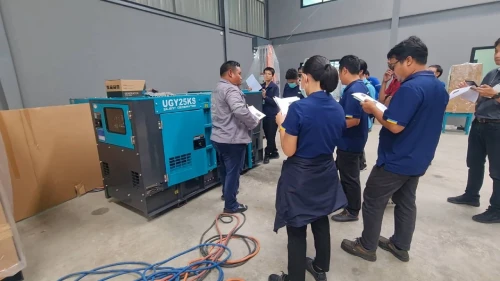
Generator Type: House Generator VS Industrial Generator
You should already have an idea of what type of generator you need. If you are a homeowner looking for backup power or backup power. You will need a standby generator. These sizes range from 15kW-50kW for a whole house backup generator. These generators generally use 3 phase electricity. This is enough to power small or large devices at a constant current.
Industrial generators are available in many sizes. Ranging from approximately 20kW-2000kW, large business and industrial applications obviously require larger power outputs and often use three-phase motors to achieve higher power outputs. Office buildings, manufacturing plants, data centers and complexes such as shopping malls, condominiums, restaurants, companies, hospitals, clinics, hotels, factories, resorts, orchards, farms, warehouses, cold storages, and stores all require generators with larger capacity. In this case, whether it is about the main power supply or emergency backup power generation.
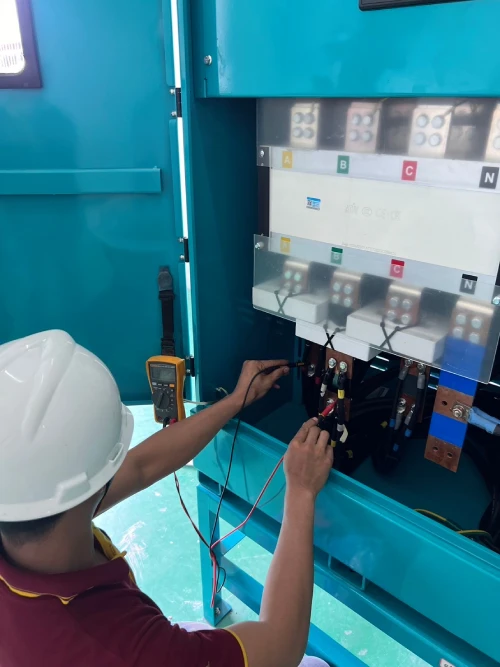
How to calculate generator size
The basic generator sizing formula looks like this:
- Create a list of all electrical devices or appliances.
- Set the starting power (the power required to turn on the machine) and the power used (Energy required to operate) for each device These numbers are generally engraved somewhere on the device. Including recording it in the user manual.
- Calculate your total power needs by adding these kW or KVA numbers.
For devices with units of amperes You can convert amps to watts with the following formula:
- For resistance load (General type): Watts = Amperes x Volts
- For reactive loads: Watts = Amperes x Volts x Load Factor
Load Factor is the ratio of electric power consumption in kilowatt-hours to peak demand in kilowatts. You can calculate this by your utility bills. See the information and use it in the following formulas:
- Total kWh for the previous month / (your peak demand during the period x 30 days x 24 hours)
Even if you lose your appliance manual. You should be able to look up wattage details online. However, if you can’t determine the power draw of a piece of equipment, You can see the table below, for example, these are the starting numbers and functions of some common electronic tools and devices:
| electrical appliance | Starting power (W) | Power used (W) |
| Air compressor | 4000 | 2000 |
| Grinding machine | 4000 | 2000 |
| Router | 1500 | 600 |
| Electric saw | 2400 | 1200 |
| Saw table | 4500 | 1800 |
| Water heater | 4500 | 4500 |
| Computer notebook | 250 | 250 |
| Printer | 500 | 500 |
| Air conditioner (10k BTU) | 2200 | 1500 |
| Dishwasher | 1450 | 1400 |
| TV (55”) | 230 | 230 |
Once you know the approximate number of watts you need, The generator size will be easier to choose. No matter how many numbers you get Instead, choose a generator with a capacity 10-20% greater than your needs. This will help you with time and if you replace your electrical equipment and end up needing more power. It also helps you manage the under-performance of your generator.
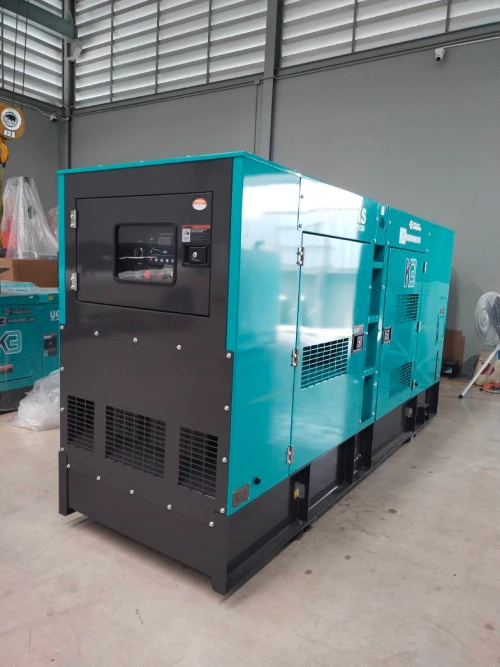
Buying a single generator VS buying multiple generators
If your energy needs are high enough You may be wondering if it is better to run a single large diesel generator or split the load between two or more smaller generators. For example, instead of installing a 1200kW generator, you could install three 400kW generators. The machine can This is called parallelism. synchronization And it can be a good choice in the right situation. Here’s why:
1. More flexibility
It is very likely that the reason you purchased a generator was to increase its reliability. Power supply failure protection This slows down or disrupts your business operations. with multiple generators So you don’t have to worry if the machine has to be shut down for maintenance. You just share the burden with others and keep working.
If only one generator If it has to stop, you stop too.
2. Save more costs
Of course, prices vary greatly depending on the brand. There are new generators and second-hand generators, etc., but all things being equal. When you parallel a generator beyond a certain size. Paralleling is more economical than using a single machine.
3. More practical
Depends on your area It may be easier to install two or three parallel generators in a room than one large unit. Among the large commercial generators A smaller capacity can mean a difference of 25 square feet or more per unit.
4. Easier for generator
Dividing the load between two or more generators can extend the life of each generator. and avoid the risk of overburdening a single unit. For continuous use Generator capacity can be loaded up to 80%, which is ideal.
Generator size and fuel consumption
Similarly, a 3,500 class truck uses more fuel than a 1,500. A large generator uses fuel faster than a smaller one. This is important to remember when “Do the math” on how much a new or used generator might cost. Not only will you need to refuel your large generator more often, But it may still be necessary to store additional fuel on site. This results in the need for additional storage tanks as well.
For this reason, when it comes to K3 Machine residential generators, it is recommended to purchase the smallest home backup generator that meets your needs. This limits the amount of fuel you need to store to use it.
for industrial generators Please estimate the amount of fuel you will burn in a particular size generator. That works at one quarter, half, three quarters, or full power. You can contact us K3 Machine to help evaluate it.
Why is it important to choose the right generator size ?
You may want to downsize your generator. Especially since doing so may save you a lot of money, however. Choosing a generator that is too small for your device or appliance is a disaster. Not only can you damage appliances and equipment that draw power from the generator. You can also damage the generator itself.
Here are some advantages of using a large generator over the actual power required:
- Increase the life of the generator
- Consistent production efficiency
- Limitation of unexpected system failures
- Reduce the chance of damage to property
- Increase personnel safety
- Reduces the risk of overheating and electrical fires
- Reduce maintenance frequency and costs
- Increase convenience and speed in maintenance